Published by Techeot Sanaatan Foundation.
Category: Education & Skills | Indian Knowledge System | IKS | Culture & Heritage Reading Time: 8 minutes
The story of education in India is one of the longest, most interrupted, and most extraordinary stories in human intellectual history. It begins not with a school but with a relationship — a Guru sitting under a tree, a child asking their first question — and it runs forward through five millennia of continuous, evolving, sometimes catastrophically disrupted transmission of knowledge.
Understanding that story does not just satisfy curiosity. It explains why education in India feels the way it does — its contradictions, its achievements, its failures — and points toward what it could yet become.
Stage 1: The Vedic Period (2000–600 BCE) — Knowledge as Sacred Sound
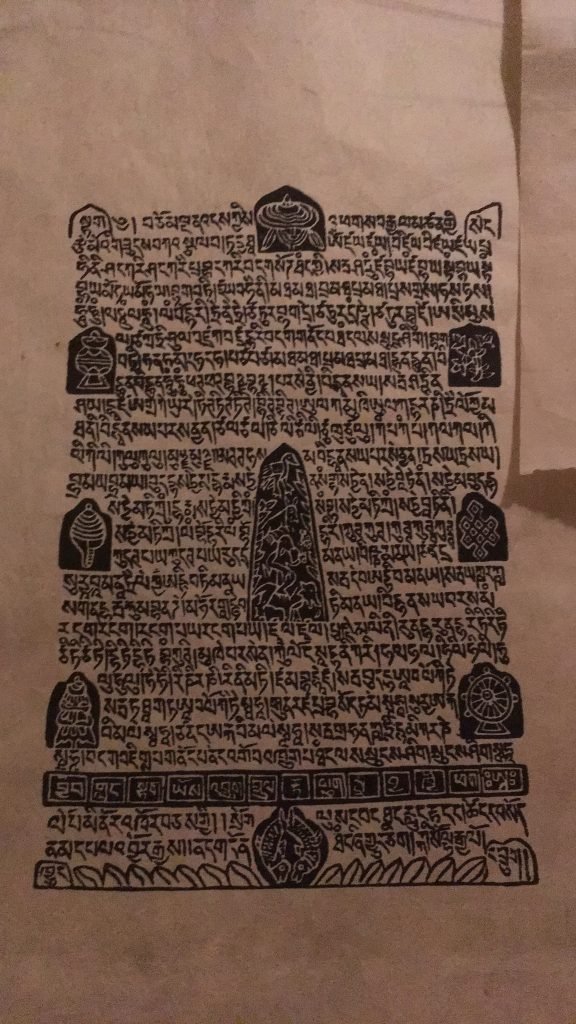
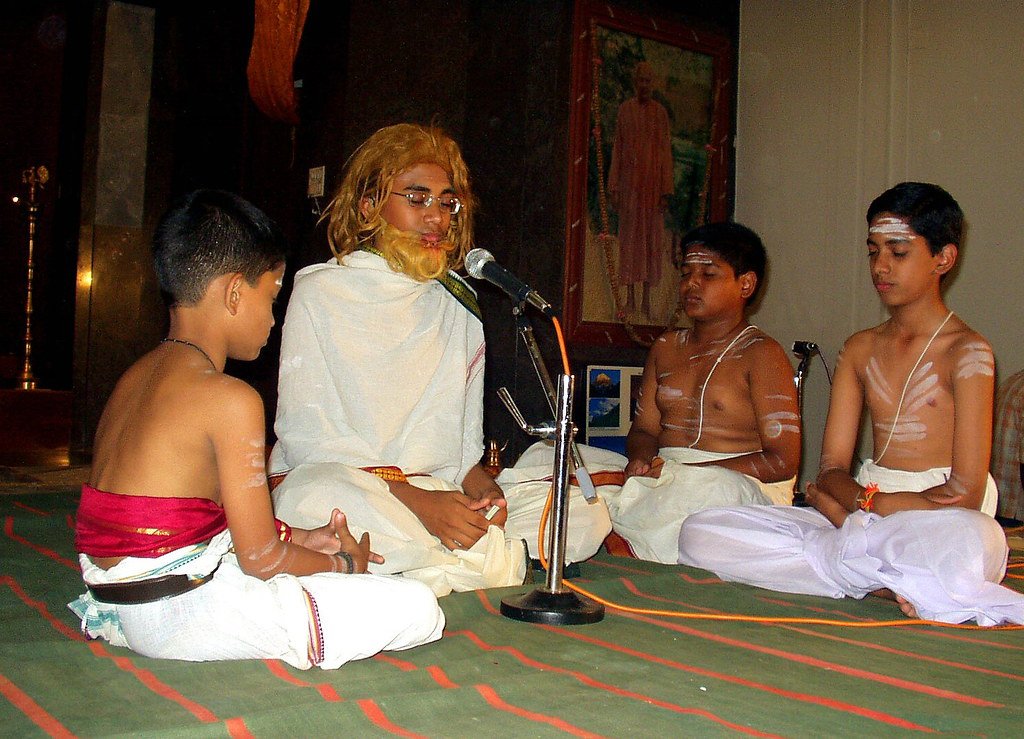
The earliest Indian education was oral. The Vedas were not written. They were heard — by seers in states of deep meditation — and then transmitted by voice from teacher to student with extraordinary precision. The Vedic oral tradition is the longest sustained memorisation tradition in human history: texts of hundreds of thousands of words, transmitted without error across generations for two to three thousand years before they were written down.
This oral tradition was not primitive. It was sophisticated. It required the development of elaborate mnemonic systems — patterns of recitation, cross-checking mechanisms, multiple parallel oral traditions that could be compared to detect errors. The science of this oral transmission — Shiksha — is itself one of the six Vedangas, or auxiliary sciences of the Vedas.
Education in this period was inseparable from spiritual formation. The student lived with the Guru. The curriculum was simultaneously intellectual and ethical — you could not learn the Vedas without simultaneously learning Dharma.
Stage 2: The University Period (500 BCE – 1200 CE) — Knowledge as Global Enterprise
Takshashila, Nalanda, Vikramashila, Vallabhi, Odantapuri — the great ancient universities of India represent the highest achievement of the Gurukul tradition scaled to institutional form. Students from across Asia came to learn. Knowledge was encyclopedic — philosophy, medicine, mathematics, astronomy, grammar, law, military science, arts.
This was not knowledge as credential. It was knowledge as transformation — the systematic expansion of the student's capacity to understand the world, act wisely within it, and contribute to its ongoing development.
The destruction of these universities — Nalanda in 1193, Vikramashila shortly after — was not merely the loss of buildings. It was the destruction of an intellectual ecosystem that had taken a thousand years to build.
Stage 3: The Survival Period (1200–1800 CE) — Knowledge Goes Underground
After the destruction of the great universities, Indian learning retreated into smaller, more local forms: temple schools, Matha-affiliated education, family-based transmission of specialist knowledge — in medicine, in astronomy, in mathematics, in craft traditions. Knowledge survived — but in fragmented, local, often secretive forms.
This period produced extraordinary individual achievements: the Kerala School of Mathematics (developing calculus independently in the 14th century), Madhava's infinite series, sophisticated Ayurvedic and Jyotisha traditions maintained in regional centres. But the grand integrative tradition of the great universities was gone.
Stage 4: The Colonial Period (1800–1947) — Knowledge as Civilisational Conflict
The arrival of British colonial education policy represents one of the most significant — and most damaging — educational interventions in history. Macaulay's 1835 Minute on Indian Education explicitly aimed to create Indians who were "Indian in blood and colour, but English in taste, in opinions, in morals, and in intellect."
The colonial curriculum systematically excluded Indian knowledge traditions from the domain of "real" knowledge. Mathematics was taught without reference to Aryabhata. Science was taught without reference to Sushruta. Literature was taught without reference to the Mahabharata or the Ramayana. The educated Indian was trained to see their own tradition as primitive, superstitious, and pre-modern.
The psychological damage of this project is still being recovered from.
"The most potent weapon in the hands of the oppressor is the mind of the oppressed." — Steve Biko
Stage 5: The Republic Period (1947–Present) — Potential and Frustration
Independent India inherited a colonial education system and tried to make it serve a democratic, pluralist, developing nation. The results have been mixed. Mass literacy has improved dramatically. Access to higher education has expanded. India's IITs and IIMs have produced world-class talent.
But the knowledge tradition — the deep integration of Indian philosophy, science, mathematics, ethics, and art that characterized the great university period — has largely remained outside the formal education system. Students graduate knowing Newton but not Aryabhata. Knowing Shakespeare but not Kalidasa. Knowing Freud but not Patanjali.
The National Education Policy 2020 represents the most significant attempt to address this gap in independent India's history. Its emphasis on the Indian Knowledge System — on mother-tongue instruction, on integration of Indian philosophical and scientific traditions into formal curricula — is a genuine turning point.
Stage 6: The TSF IKS Curriculum — Completing the Circle
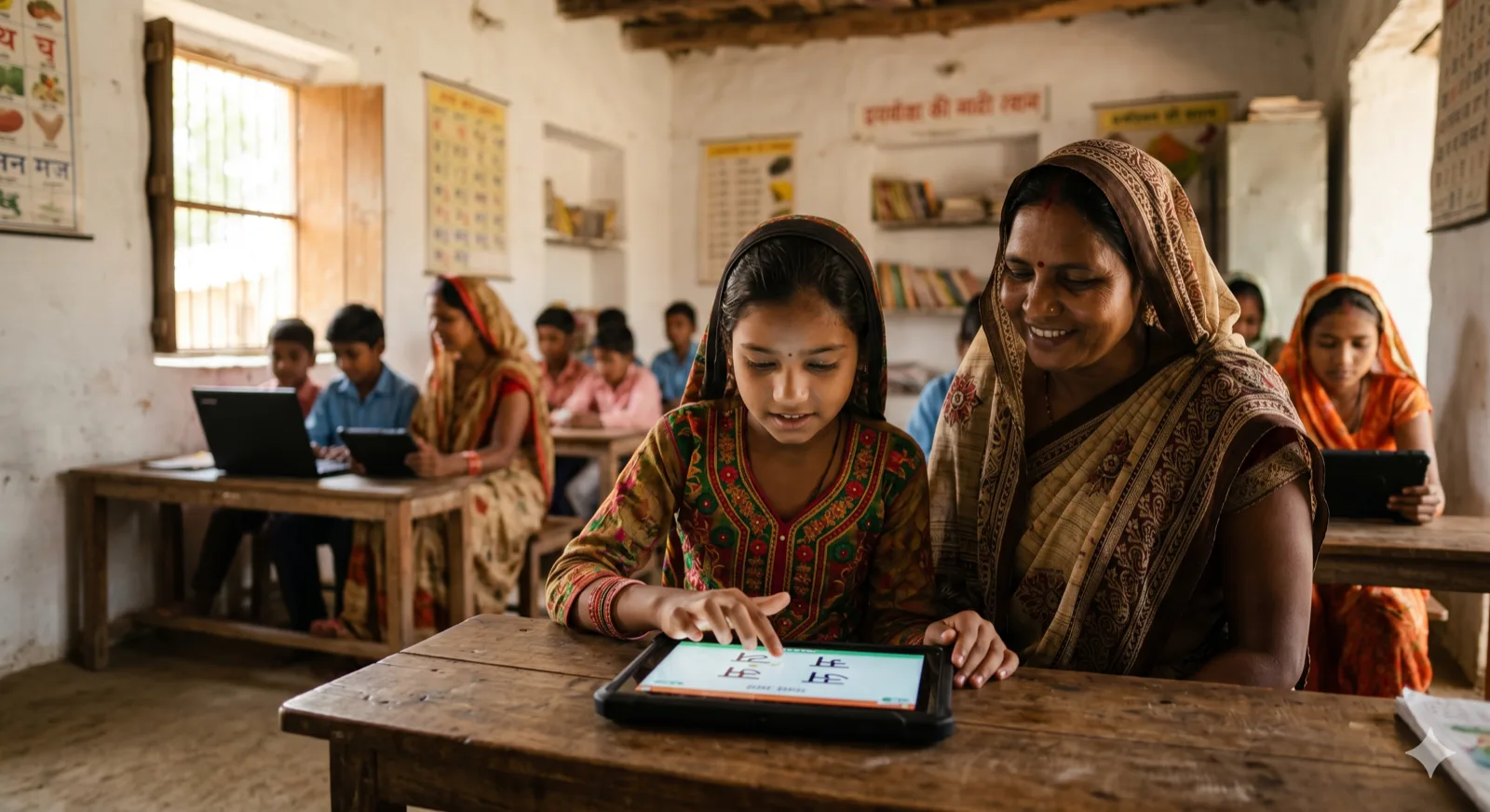
At Techeot Sanaatan Foundation, our 12-year IKS curriculum is built on a simple conviction: that the next stage of Indian education must recover the integration that was lost — the integration of knowledge, ethics, and practice that characterised the great university tradition — and deliver it through the technologies of the 21st century.
Not to recreate the past. To honour it — and build forward from it.
The child who graduates from our Class 12 programme will have encountered Mohenjo-daro and quantum physics, the Yoga Sutras and neuroscience, the Arthashastra and contemporary governance, the Ramayana and contemporary ethics. They will be genuinely educated — in the deepest sense of that word.
TSF's IKS curriculum: the next chapter in the 5,000-year story of Indian education. Visit www.sanaatan.io