Published by Techeot Sanaatan Foundation.
Category: Indian Knowledge System | IKS | Sciences Reading Time: 8 minutes
Nothing in Indian traditional knowledge is more misunderstood by modern Indians — or more unfairly dismissed — than Jyotisha. Western-educated Indians often translate it as "astrology" and immediately file it under superstition. More traditional Indians defend it as an infallible system of prediction. Both responses miss what Jyotisha actually is — and what it achieved.
Jyotisha is the science of light. From Sanskrit: Jyoti (light) and sha (knowledge). It is one of the six Vedangas — the auxiliary sciences that support the study of the Vedas — and it encompasses what we would today separate into two distinct disciplines: astronomy (the observation and mathematical description of celestial phenomena) and astrology (the interpretation of celestial phenomena for human affairs).
In ancient India, these were not separate. They were two aspects of a single enterprise: understanding the relationship between the cosmos and human life.
The Astronomical Achievements Are Unambiguous
Whatever one thinks of the predictive claims of Jyotisha, the astronomical achievements of the tradition are documented and verifiable.
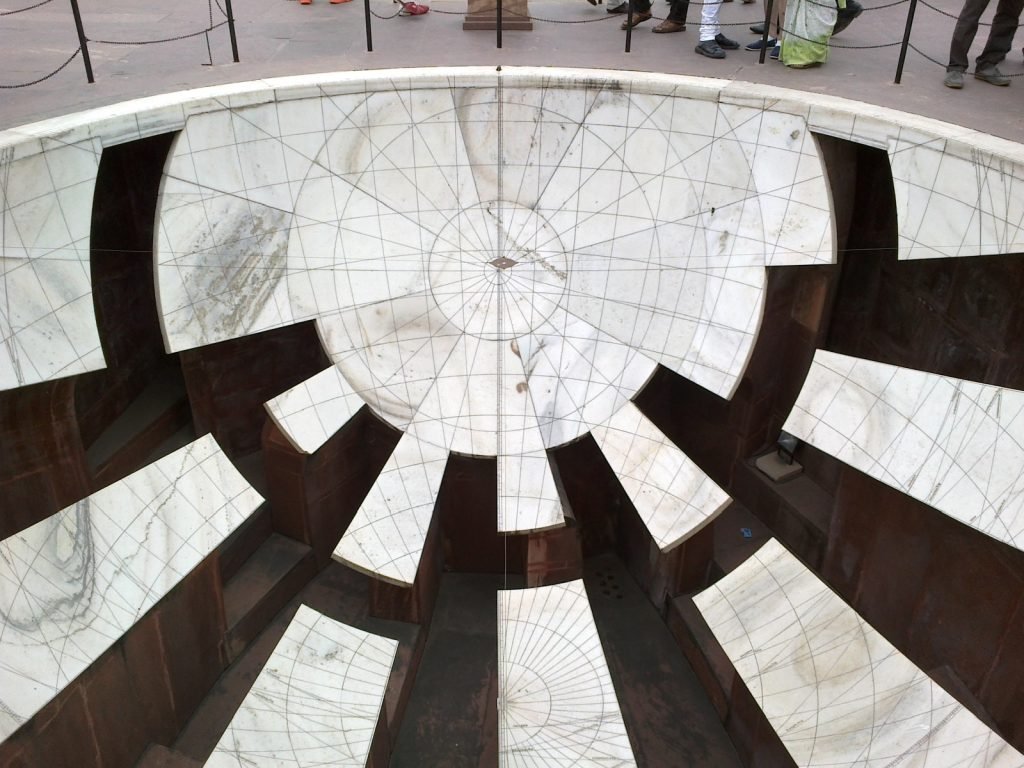
Aryabhata (499 CE) calculated the length of the solar year as 365.3586805 days — accurate to four decimal places, more precise than the Julian calendar that Europe used for over a thousand years. He calculated the circumference of the Earth, described the correct explanation of lunar and solar eclipses, and identified that the apparent movement of stars is due to the rotation of the Earth — a heliocentric insight predating Copernicus by a thousand years.
Brahmagupta (628 CE) calculated the circumference of the Earth as 36,000 km (actual: 40,075 km) and developed sophisticated mathematical methods for planetary calculation. His work influenced Islamic astronomy, which in turn influenced Copernicus and Kepler.
Varahamihira (6th century CE) compiled the Panchasiddhantika — a summary of five contemporary astronomical schools — and wrote the Brihat Samhita, an encyclopedic text covering eclipses, rainfall prediction, plant biology, gemology, and architecture alongside astronomical observation.
The Panchanga — the Vedic almanac still used today — is a calculation of five astronomical quantities: Tithi (lunar day), Vara (day of the week), Nakshatra (lunar mansion), Yoga (a combined solar-lunar unit), and Karana (half-lunar day). To calculate a Panchanga requires sophisticated astronomical mathematics. The tradition of calculating the Panchanga accurately has been maintained continuously for over two thousand years.
The 27 Nakshatras: A Map of the Moon's Path
One of Jyotisha's most distinctive contributions is the system of Nakshatras — the 27 (or 28) lunar mansions that divide the sky into sections corresponding to the Moon's daily movement. The nakshatra system is one of the oldest star catalogues in human history, predating the Greek zodiac.
Each Nakshatra is associated with a particular star or star cluster, a presiding deity, a symbolic animal, and a set of qualities. The Moon moves through one Nakshatra approximately each day — and the combined position of the Moon and Sun in the Nakshatra system determines the auspicious and inauspicious timings used in Vedic ritual and, later, in astrological prediction.
From an astronomical standpoint, the Nakshatra system represents a sophisticated empirical observation of the sky — 27 reference points that allow precise description of celestial positions without telescopes or electronic instruments. From a cultural standpoint, it is the framework within which India's relationship with the night sky has been organised for millennia.
"Before there were telescopes, there was attention. India paid attention to the sky for four thousand years. What that attention produced deserves serious study."
The Predictive Claims: How to Think About Them
The astronomical substrate of Jyotisha is well-established. The predictive claims — that the position of planets at the time of one's birth influences the course of one's life — are more contentious.
The honest position is that the evidence for astrological prediction is not scientifically established. Controlled studies have not demonstrated that astrological prediction performs above chance levels. At the same time, the wholesale dismissal of Jyotisha as pure superstition ignores the sophisticated observational and mathematical tradition from which it emerges — and the possibility that it contains encoded knowledge we have not yet fully understood.
What is certain is that Jyotisha's astronomical observations have preserved a record of the Indian sky across thousands of years. These records — the timings of eclipses, the positions of planets, the rising of stars — have genuine scientific value as a long-duration astronomical data set.
Jyotisha in TSF's IKS Curriculum
In TSF's curriculum, Jyotisha is taught at the secondary and senior levels as a subject that requires both critical engagement and genuine appreciation. Students learn the mathematical astronomy of the tradition — the Nakshatra system, the Panchanga calculation, the methods of Aryabhata and Brahmagupta. They learn to appreciate the observational sophistication that produced these systems. And they learn to distinguish between the astronomical heritage — scientifically valuable and historically significant — and the predictive claims, which require critical evaluation rather than either wholesale acceptance or dismissal.
This is the model of engagement that the tradition deserves: serious, curious, critical, and genuinely open to what four thousand years of careful attention to the sky might have preserved.
TSF's IKS curriculum includes Jyotisha as part of the Ganita and Sciences strand from Class 7 onwards — teaching both astronomical heritage and critical thinking. Visit www.sanaatan.io