Published by Techeot Sanaatan Foundation.
📂 Indian Knowledge System | IKS | Science & Heritage ⏱ 9 min read
Every Indian schoolchild is taught that India gave the world zero. It is a fact delivered with pride — and then the lesson moves on. What we rarely teach is the extraordinary civilisation of knowledge that surrounded that single invention.
India did not just invent zero. India gave the world surgery, grammar, atomic theory, urban planning, linguistics, yoga, astronomy, metallurgy, game theory, and one of the first universities in human history. The tragedy is not that we lost this knowledge. The tragedy is that we forgot we had it.
The World's First University Was Indian
In the 5th century BCE — when most of the world was still organized around tribal chieftains — Takshashila (modern-day Pakistan) was operating a university that attracted students from as far as China, Greece, and Mesopotamia. Students came to study Vedic literature, medicine, law, military science, archery, astronomy, and the arts.
Then came Nalanda. Established in the 5th century CE, Nalanda was possibly the greatest centre of learning the ancient world had ever seen — a residential university with 10,000 students, 2,000 faculty, and a library so vast that when it was burned by Bakhtiyar Khilji's forces in 1193, it reportedly burned for three months.
"When Nalanda burned, the world lost not just books — it lost three months' worth of human knowledge."
Aryabhata and the Mathematics of the Stars
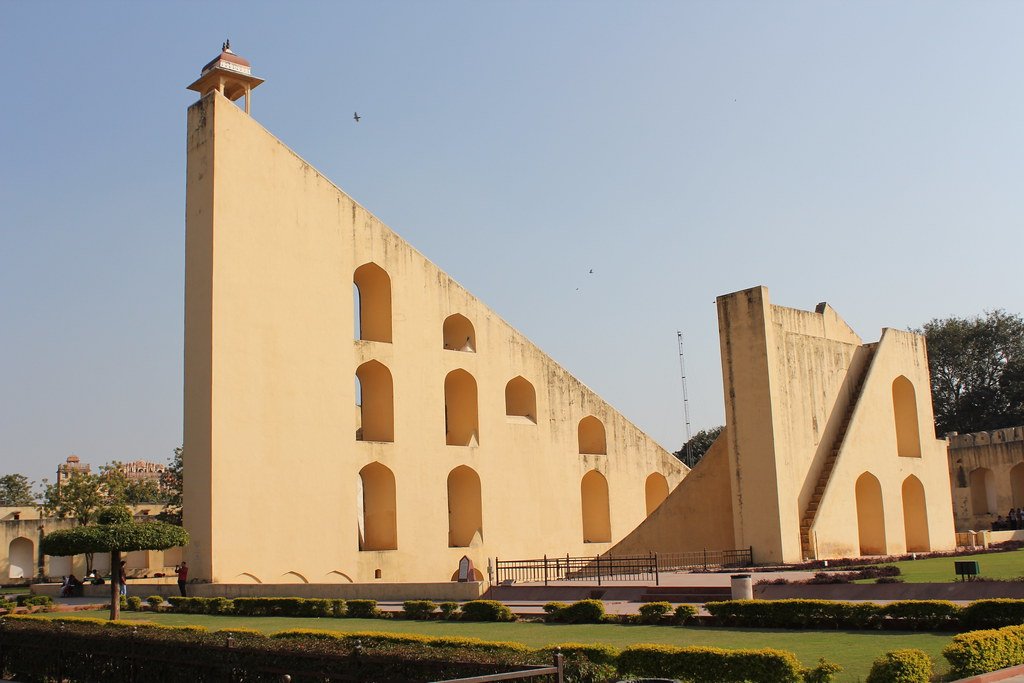
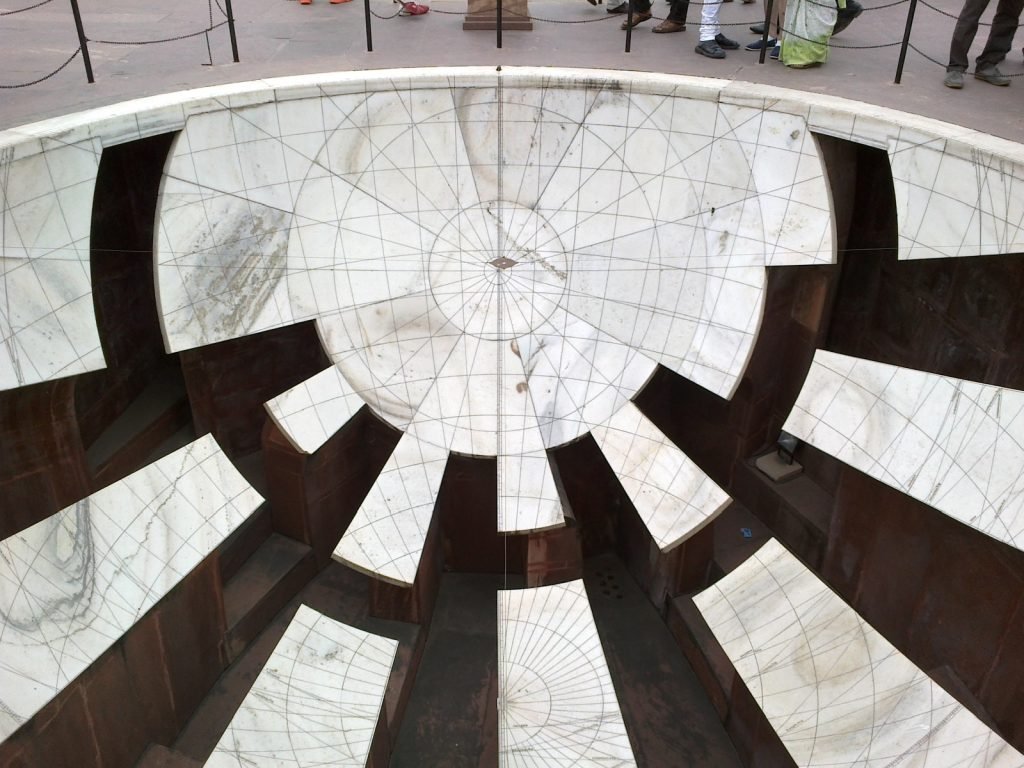
In 499 CE, Aryabhata wrote the Aryabhatiya — a mathematical and astronomical text that calculated the circumference of the Earth with remarkable accuracy, described the Earth's rotation on its axis (a thousand years before Copernicus), and introduced the decimal place-value system. He also calculated the value of pi to four decimal places.
This was not a lucky guess. It was the product of a tradition of rigorous mathematical inquiry stretching back to the Vedic period, through the Sulba Sutras — geometric texts used to construct fire altars with precision that astonished modern mathematicians when they were first seriously studied.
Sushruta: The World's First Surgeon
The Sushruta Samhita, composed around the 6th century BCE, describes over 300 surgical procedures and 120 surgical instruments. Sushruta performed cataract surgery, rhinoplasty (plastic surgery of the nose), Caesarean sections, and procedures for removing kidney stones. He understood the importance of hygiene, pre-operative preparation, and post-operative care.
Modern plastic surgery traces its lineage to Sushruta. The word 'rhinoplasty' itself is named after a procedure Sushruta described 2,500 years ago.
Panini and the World's First Formal Grammar
Around the 4th century BCE, the grammarian Panini composed the Ashtadhyayi — 3,959 rules of Sanskrit grammar expressed with such mathematical precision that modern computer scientists use it as a model for formal language theory. Noam Chomsky, the father of modern linguistics, has acknowledged Panini's influence on his own work.
Panini essentially created a 'programming language' for human speech — one so logically rigorous that it remains unmatched in linguistic history.
Why Did We Forget?
The reasons are multiple and complicated. Colonial education systems were deliberately designed to replace Indian knowledge frameworks with European ones. Macaulay's famous 1835 Minute on Indian Education explicitly sought to create 'a class of persons, Indian in blood and colour, but English in taste, in opinions, in morals, and in intellect.'
It worked. For generations, educated Indians were taught that knowledge came from Greece, Rome, and the Western Enlightenment. Indian contributions were either ignored, dismissed, or quietly attributed to other sources.
The result is that most Indians today can name Newton, Darwin, and Freud — but not Aryabhata, Sushruta, or Panini.
The Reclamation Has Begun
The Government of India's Indian Knowledge System (IKS) initiative — now a central component of the National Education Policy 2020 — is one of the most ambitious attempts to reintegrate this lost heritage into modern education. At Techeot Sanaatan Foundation, we have built a complete 12-year IKS curriculum — from Class 1 to Class 12 — that introduces children to this heritage not as mythology, but as documented intellectual history.
Because a nation that does not know its intellectual heritage cannot fully claim its intellectual future.
"सा विद्या या विमुक्तये — That alone is knowledge which liberates."
Explore TSF's IKS curriculum and help us reclaim 5,000 years of Indian intellectual heritage. Visit www.sanaatan.io