Published by Techeot Sanaatan Foundation.
📂 Indian Knowledge System | IKS | Sciences ⏱ 8 min read
Let's play a game. Name five Indian scientists. If you're like most Indians educated after Independence, you named A.P.J. Abdul Kalam, C.V. Raman, Homi Bhabha, Vikram Sarabhai, and maybe Srinivasa Ramanujan. All remarkable. All modern.
Now name five ancient Indian scientists. Longer pause. Aryabhata, if you remember your Class 6 textbook. Perhaps Sushruta. And then… silence.
That silence is the problem. Because the list of ancient Indian scientific contributions is not five names long. It is a civilisation-wide achievement spanning two millennia — in mathematics, astronomy, chemistry, metallurgy, linguistics, medicine, and materials science. And most of it has been systematically excluded from the story of human scientific progress.
Mathematics: India's Greatest Export
The decimal number system — the system you use every time you count, calculate, or code — is an Indian invention. The numerals 1 through 9, the concept of zero as both a placeholder and an actual number, the place-value system that makes arithmetic possible — all developed in India, transmitted to the Arab world around the 7th century CE, and then to Europe in the 12th century (which is why we call them 'Arabic numerals,' erasing their Indian origin entirely).
Brahmagupta (7th century CE) wrote the first systematic treatment of zero as a number, described rules for arithmetic operations with negative numbers, and provided one of the first solutions to the general quadratic equation — all of which Europe would not independently achieve for nearly a thousand years.
Bhaskara II (12th century CE) calculated the derivative and worked with differential calculus concepts — three centuries before Newton and Leibniz are credited with 'inventing' calculus. The Kerala School of Mathematics (14th-16th century CE) developed infinite series for trigonometric functions that anticipate the work of Gregory, Newton, and Leibniz.
"The numerals you use to read this sentence were invented in India. The fact that we call them Arabic numerals is one of history's most enduring misattributions."
Astronomy: Watching the Stars for 4,000 Years
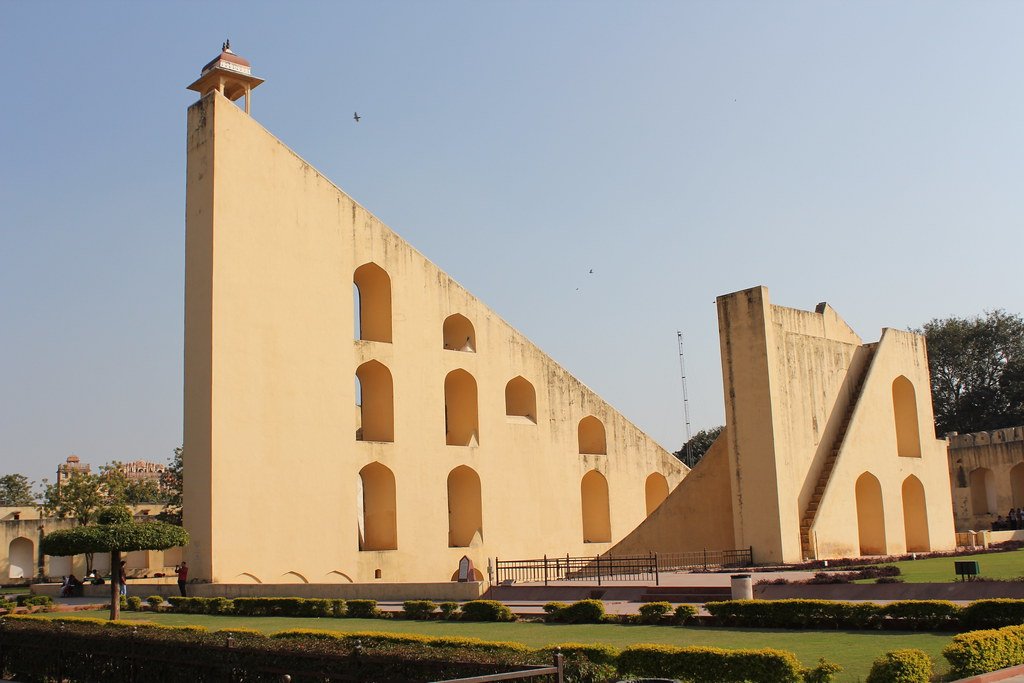
The Vedanga Jyotisha — dated to approximately 1200 BCE — contains systematic observations of celestial movements used to determine the timing of Vedic rituals. This makes it one of the oldest systematic astronomical texts in human history.
Aryabhata (499 CE) proposed that the Earth rotates on its axis — explaining the apparent movement of stars across the sky. He calculated the length of the solar year as 365.358 days (remarkably close to the modern value of 365.256 days). He correctly calculated the causes of solar and lunar eclipses. He estimated the diameter of the Earth with impressive accuracy.
Varahamihira (6th century CE) compiled the Brihat Samhita — an encyclopedic text covering astronomy, astrology, mathematics, botany, and meteorology. Brahmagupta (7th century CE) calculated the circumference of the Earth as 36,000 km (the actual value is 40,075 km — a remarkable approximation without modern instruments).
Chemistry and Metallurgy: The Iron Pillar That Should Not Exist
In the Qutb Minar complex in Delhi stands an iron pillar that has been there for 1,600 years — and has not rusted. This is not a miracle. It is materials science. Ancient Indian metallurgists achieved a phosphoric composition in the iron that creates a thin protective layer of iron hydrogen phosphate, preventing corrosion. Modern materials scientists have studied this pillar extensively and still marvel at the achievement.
The ancient Indian text Rasaratnakar (attributed to Nagarjuna, 8th century CE) describes complex chemical processes including the preparation of mercury compounds, processing of metals and alloys, and what appear to be early alchemical distillation techniques.
Linguistics: The Language That Became Computer Science
Panini's Ashtadhyayi (approximately 4th century BCE) is a grammatical description of Sanskrit in 3,959 rules — a formal, generative grammar of extraordinary mathematical precision. Noam Chomsky, the father of modern linguistics, has described the Ashtadhyayi as the most complete generative grammar of any language. Computer scientists use Panini's formal methods as models for programming language design.
The Ashtadhyayi was not just grammar. It was the first formal language system in human history. And it was Indian.
Why Does This Matter Today?
It matters because identity is built on knowledge. A people who do not know their intellectual heritage cannot fully claim their intellectual future. Young Indians who are taught to look to the West for scientific inspiration while remaining ignorant of Aryabhata and Brahmagupta and Panini grow up with a fractured sense of who they are and what they are capable of.
At Techeot Sanaatan Foundation, our IKS curriculum integrates this heritage from Class 1 onwards — not as mythology or ancient history, but as documented scientific achievement that deserves to be taught with the same rigour as Newton's laws or Darwin's theory. Because it earned that place.
TSF's IKS curriculum: 12 years of integrated learning that reclaims India's intellectual heritage for the next generation. Visit www.sanaatan.io