Published by Techeot Sanaatan Foundation.
📂 Education & Skills | IKS | Culture & Heritage ⏱ 7 min read
When people hear the word 'Gurukul,' they often imagine something primitive — students sitting cross-legged on forest floors, memorizing verses they don't understand, cut off from the modern world. This image is not just unfair. It is historically illiterate.
The Gurukul system produced mathematicians, astronomers, surgeons, philosophers, poets, military strategists, and diplomats. It produced Chandragupta Maurya at Takshashila, Aryabhata at Nalanda, Chanakya at Pataliputra. The students who sat in those forest schools changed the world.
So before we dismiss the Gurukul, perhaps we should ask what it actually was — and what it got right that our modern education system gets wrong.
What the Gurukul Actually Looked Like
The word 'Gurukul' literally means 'family of the teacher' — from 'Guru' (teacher) and 'Kul' (family). Students, called Shishyas, lived in the home of their Guru from childhood until their education was complete — often 12 to 25 years. Education was not transactional. It was relational.
The curriculum was extraordinarily broad: Vedic texts, mathematics, astronomy, medicine, law, military arts, music, logic, debate, ethics, and practical life skills. Students were not taught to memorize for exams. They were taught to think — to debate, to question, to discover.
The relationship between Guru and Shishya was sacred. The Guru was not merely a subject-matter expert. He was a mentor, a life guide, a moral authority. The student did not just learn from the Guru's words — they learned from watching how the Guru lived.
What Modern Education Gets Right — And What It Gets Wrong
Modern schooling has brought literacy, access, and standardisation at a scale the Gurukul never achieved. A child in rural Rajasthan can access the same curriculum as a child in South Delhi. That is not nothing. That is a genuine achievement.
But modern education has also created a system of remarkable uniformity and remarkable shallowness. Students learn facts but not wisdom. They learn to answer questions but not to ask them. They learn subjects in isolation — mathematics disconnected from nature, history disconnected from philosophy, science disconnected from ethics.
The Gurukul understood something modern education often forgets: that knowledge is not a collection of facts. It is a way of seeing the world.
"The Gurukul did not teach you what to think. It taught you how to think — and why thinking matters."
Three Things the Gurukul Got Right
1. The Teacher-Student Relationship Was Sacred
In a Gurukul, you could not mass-produce education. A Guru took a limited number of Shishyas because the relationship required genuine attention. Research consistently shows that the quality of the teacher-student relationship is the single most important factor in learning outcomes. The Gurukul institutionalised this insight.
2. Character Was Curriculum
The Gurukul did not separate knowledge from ethics. Dharma — right conduct — was woven into every lesson. Students were taught mathematics alongside self-discipline, astronomy alongside humility, warfare alongside mercy. The idea that you could teach skills without simultaneously forming character would have been incomprehensible.
3. Practical and Theoretical Were Integrated
Students in a Gurukul learned medicine by accompanying the Vaidya to patients. They learned military strategy by practising it. They learned agriculture by farming. Knowledge was never purely theoretical. It was always connected to life.
The TSF Approach: Gurukul Wisdom, Modern Delivery
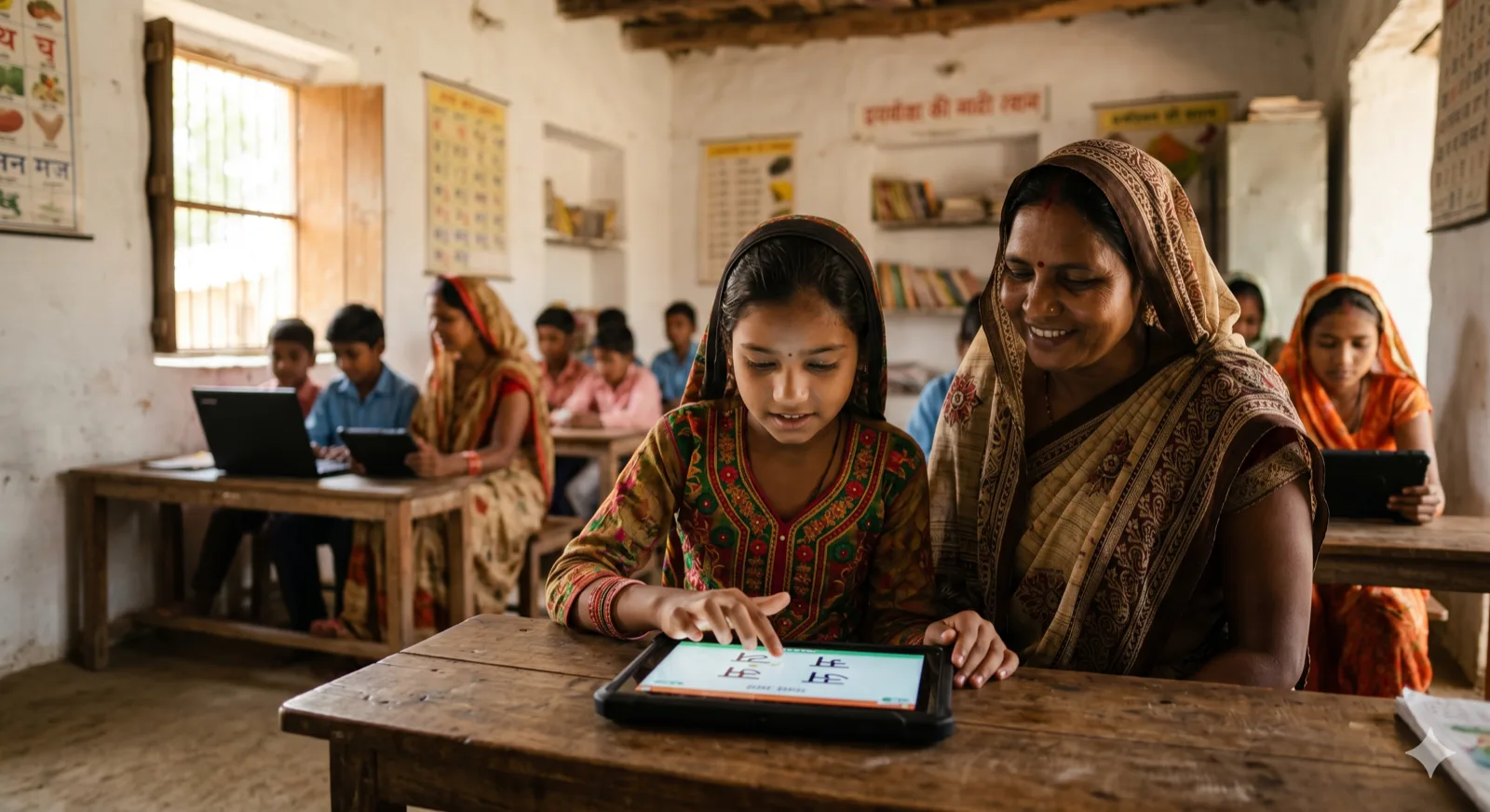
At Techeot Sanaatan Foundation, our Indian Knowledge System curriculum is built on exactly this insight. We use modern Learning Management System (LMS) technology to deliver ancient pedagogical principles: story-based learning, project-based assessment, integration of arts and sciences, and a deep emphasis on values alongside knowledge.
We cannot recreate the Gurukul in its original form. Nor should we. But we can bring back the best of what it understood about how human beings learn — and build it into the education system our children deserve.
Learn about TSF's IKS curriculum — 12 years, 4 stages, rooted in Gurukul wisdom and delivered for the modern world. Visit www.sanaatan.io